
Introduction
Quick question. How many animals can you actually name right now, off the top of your head?
Go ahead and try our random animal generator. Most people land somewhere between thirty and sixty before they start repeating themselves or reaching for things like “um, the stripey horse.” And here is the funny part — if you compared your list to a friend’s list, they would probably be almost identical. Same lions, same sharks, same elephants. Same small comfortable circle of creatures that everyone knows.
Meanwhile, there are roughly two million documented animal species on this planet. A gecko in Madagascar that is almost physically impossible to spot because it looks exactly like a dead leaf sitting on a branch. A frog in North America that freezes completely solid every winter — no heartbeat, no breathing — and then just wakes up when spring arrives. A mantis shrimp that can see colors humans literally cannot process and punches with enough force to crack aquarium glass.
Real animals. All of them. And most people will never hear a word about any of them.
That is the problem this tool exists to solve. Click once, get a random animal from a pool of over 500 species, and immediately see seven real facts about it — name, class, diet, lifespan, height, top speed, weight. No search bar. No knowing what you want to find. Just something completely new landing in front of you every single time you click.
How to Use the Random Animal Generator
Seriously, it takes about ten seconds. But here is the full breakdown:
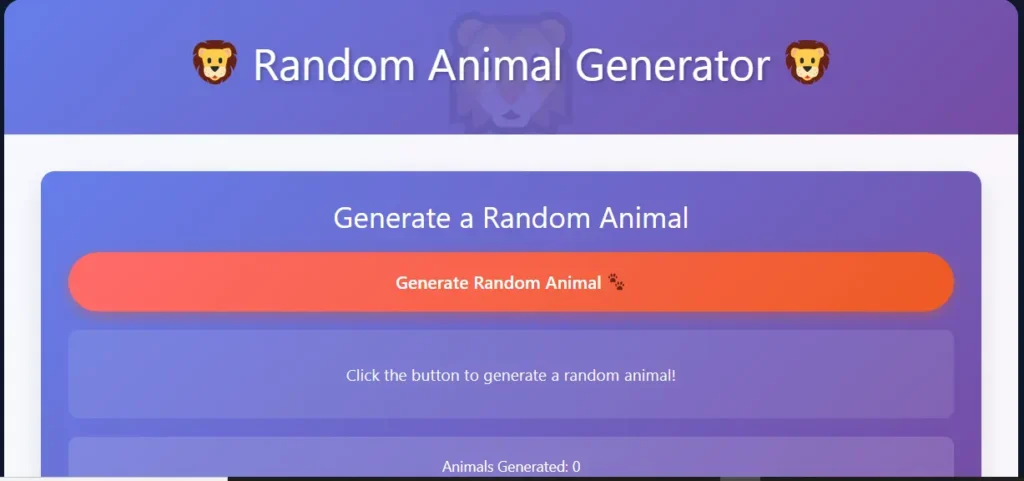
1 Open the page. Nothing is confusing about the layout — one button, dead center, waiting for you.
2 Click “Generate Random Animal.” A short loading animation plays while the tool picks something from the database, then your result shows up.
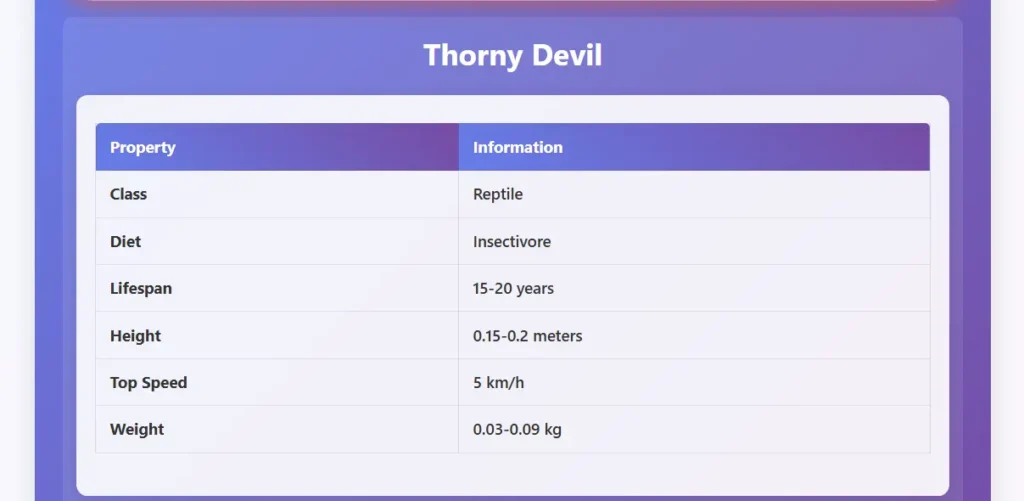
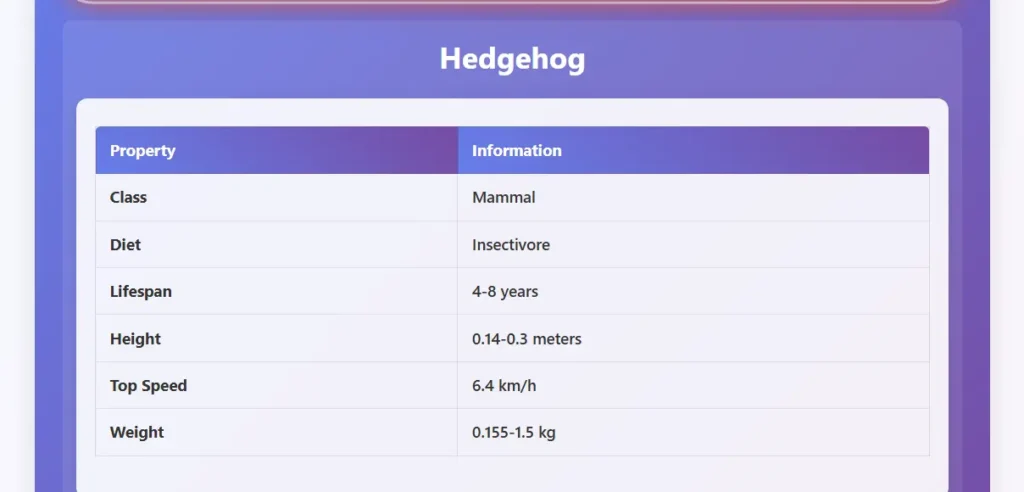
3 Look at what came up. Name at the top, then a table with the class, diet, lifespan, height, top speed, and weight.
4 Actually read the numbers rather than skimming them. The lifespan column, especially, some animals in this database live longer than most humans, and some are gone within a single year. Once you start paying attention to those contrasts, it is hard to stop.
5 Notice the session counter sitting at the bottom of the page. Every animal generated adds to the count. After a long session, that number becomes weirdly satisfying to watch
6 Hit Generate again. No limits. No waiting. Just keep going. Try pairing it with our random birthday generator to build a full character profile
Runs in any browser on any device. Nothing to install, nothing to sign up for.
So What Actually Is a Random Animal Generator?
The simplest way to put it: it is a tool that finds animals for you instead of making you go looking for them.
Normal search engines have a built-in limitation that nobody really talks about — they only show you what you already know to ask for. You type “cool deep sea fish” because that is the category already in your head. You are always working within the edges of your own existing knowledge.
This generator tears that whole system up. It picks the animal; you just show up. Much like our random location generator drops you somewhere unexpected on the map. Sometimes the result is something familiar — the African Elephant, the Bald Eagle, the Great White Shark. Other times, it is something that makes you immediately open a new tab because you have never heard of it in your life. The Tuatara. The Axolotl. The Vampire Squid. The Satanic Leaf-tailed Gecko, which, yes, is a completely real animal and one that looks precisely as dramatic as its name suggests.
The database covers five animal classes — Mammals, Birds, Reptiles, Amphibians, and Fish — and currently sits at over 500 species. Most free generators online give you a name and maybe a photo and consider that job done. This one gives seven full data fields per result, which is genuinely a different experience. There is a real gap between knowing an animal exists and actually understanding something interesting about it.
What Does Each Result Tell You?
Seven fields. Here is what each one covers, and honestly, why it is more interesting than it sounds.
Animal Name
The actual name people use — not the Latin taxonomy. “Cheetah.” “Blue-tongued Skink.” “Pygmy Marmoset.” The kind of name you can immediately say out loud to someone and have a conversation about.
Class
Mammal, Bird, Reptile, Amphibian, or Fish. One word that slots the animal into a biological framework and immediately tells you things — warm or cold blooded, how it breathes, how it reproduces, roughly what kind of life it leads.
Diet
Carnivore, Herbivore, Omnivore, or Insectivore. Diet is probably the most underrated field in the whole table. It explains body shape, hunting behavior, habitat preference, and every ecological relationship the animal has. You can infer an enormous amount about a creature just from knowing what it eats.
Lifespan
Typical years the species lives. Honestly this field is the one that catches people most off guard. A Blue Whale can reach 80 to 90 years. A Guppy, if everything goes its way, makes it to two. A Japanese Giant Salamander can push past 50 years in the wild. These numbers sit right next to each other in the database, in the same table format, and the contrast is jarring in a way that is genuinely hard to shake
Height
Body height or length for the species. The Giraffe comes in at 4.3 to 5.7 meters. The Pygmy Chameleon barely clears 10 centimeters. Seeing those in the same format forces you to actually grasp the scale difference rather than just accepting that “some animals are big and some are small.”
Top Speed
The maximum speed the animal can hit. The Peregrine Falcon reaches 390 km/h in a full dive — nothing on Earth moves faster under its own biological power. The Galapagos Tortoise, at the other end of the spectrum, manages 0.3 km/h on a motivated day. This field causes more arguments than any other, particularly in DnD planning sessions and charades games where someone is describing an animal without saying its name.
Weight
Typical mass range. Blue Whale at up to 200,000 kg. The Pygmy Marmoset is around 100 grams. Both are in this database. Described the same way, in the same format, sitting in a list together. That comparison does more to communicate biological diversity than any paragraph of writing could manage.
Who Actually Uses This?
More varied than you would think — and the use cases are more specific than “people who like animals.”
Teachers and Students
A teacher who pulls up this tool at the start of a biology class and generates one random animal has an immediate discussion ready — where does it sit in the food chain, what does its diet tell us, and why does it live as long as it does. Students remember it because it was not planned, it was not in the textbook, and it was specific. Teachers can also feed class responses into our word cloud generator to visualize what the group knows.
For students working on assignments, it regularly surfaces species they would never have chosen themselves, which almost always produces more interesting work than the fifteenth report on wolves.
Parents and Kids
Kids are already obsessed with animals — this tool just gives that obsession somewhere useful to go. The random element matters more than you might expect. Children genuinely do not know what is coming, and that uncertainty makes every click feel like opening something.
Sit down with a kid, generate six or seven animals, pick the most surprising fact from each one, and watch what happens. It becomes a proper conversation almost immediately. Parents who have made this a regular thing say it outperforms dedicated educational apps by a significant margin, mostly because it never feels like homework.
Writers
The problem with inventing animal details is that invented details feel invented. A realistic random animal with actual biological stats — real speed, real diet, real lifespan — adds texture to a scene that made-up creatures rarely achieve. Combine it with our random character trait generator to flesh out animal-inspired characters
The behavior follows naturally from the data. If an animal runs at 80 km/h and eats other mammals, it moves differently through a story than one that grazes and lives for forty years. Writers who use this tool as a story research starting point tend to end up with more specific, more believable animal characters. Pair it with our villain name generator for a complete character starting point
Digital Artists
Creative block for digital artists often comes down to one thing: too many choices and no clear starting point. A random animal removes the choice entirely. Generate something, commit to drawing it, and work for ten minutes. That is it. The no-pictures approach works particularly well here — read only the stats, build a mental image from the data, and draw from that rather than looking the animal up. With 500 species in the database, sessions can go a long time before anything repeats.
DnD Game Masters
Stats that come from real biology feel different than stats invented from scratch — players sense it even if they cannot explain why. Generate a real animal, take its speed, weight, and diet as a biological foundation, and build a homebrew creature outward from there. Use our medieval name generator to name the creature once the stats are set”. The internal logic holds together better, encounters feel less arbitrary, and the planning process moves faster than starting from nothing.
Trivia and Quiz People
The real value here for quiz builders is that the data goes places standard animal trivia never reaches. Lifespan comparisons between species nobody would think to compare. Weight contrasts that seem genuinely impossible until you check. Speed rankings that overturn every assumption. The database is 500 species deep, which means no two sessions produce the same animal lineup.
What Is Actually Inside the Database?
Five classes, deliberately balanced between the recognizable and the genuinely obscure.
Mammals fill 150 slots. African Elephant, Bengal Tiger, Cheetah, Giant Panda, Platypus, Capybara, Golden Lion Tamarin, Pygmy Marmoset — and well over a hundred more. The list runs from the largest land animals alive to primates smaller than most people’s hands.
Birds bring 150 species. Bald Eagle, Emperor Penguin, Peregrine Falcon, Flamingo, Andean Condor — alongside a deep raptor section that includes multiple Harrier species, several Falcon varieties, Kites, and Buzzards, not just one or two famous examples to fill a category.
Reptiles contribute 100 species. Komodo Dragon, Saltwater Crocodile, Reticulated Python, Chameleon, Bearded Dragon — plus a gecko section that goes considerably deeper than most people expect, including the Leaf-tailed Gecko, the Electric Blue Gecko, and others that will stop you mid-scroll.
Amphibians add 50 species and consistently catch people off guard. Axolotl, Poison Dart Frog, Japanese Giant Salamander, Red-eyed Tree Frog, Great Crested Newt, and several others that most users are genuinely encountering for the first time.
Fish round out the database at 100 species — Great White Shark, Clownfish, Electric Eel, Seahorse, Piranha, Manta Ray, Coelacanth, and a wide spread of Stingrays and Scorpionfish covering species most people have never heard of.
The unknown species are in there on purpose. The familiar ones make the tool approachable. The strange ones are why people stay.
Things People Actually Do With It
Speed debates — generate two animals, compare top speeds, and argue about the outcome. Works as charades too: describe an animal using only its stats, no name, and let someone guess. Better than it sounds.
Drawing warm-ups for digital artists — generate something, draw it in ten minutes. Or go no-pictures: read only the stats, picture the animal without looking it up, and draw from your imagination. Keeps sessions interesting over a long time.
Three-animal story seeds — generate three animals in a row and write a short scene that includes all three. The randomness forces combinations nobody would consciously choose. Kids especially take this somewhere unexpected and usually hilarious.
DnD encounter building — generate a real animal, use its biological stats as a creature baseline, and build from there. Faster than inventing from scratch, and produces more internally consistent results.
Frequently Asked Questions
How many animals are in the database?
Over 500 across Mammals, Birds, Reptiles, Amphibians, and Fish.
Is it free?
Completely. No account, no download, no subscription, no anything.
Good for kids?
Yes — genuinely one of the better free options out there for younger users who are already into animals.
Useful for DnD?
Very. Real biological stats make for more grounded creature design than numbers pulled from nowhere.
Facts or just names?
Seven facts per animal, every time. Name, class, diet, lifespan, height, top speed, weight. Formatting your notes? Our superscript generator helps clean up scientific notation
Does it work without pictures?
Yes — entirely text-based, which makes it ideal for drawing challenges and study sessions where you want to visualize rather than be shown.
Does it work on mobile?
Fully responsive. Works the same on a phone as it does on a desktop.
Go, click the Button
Two million known species. One button. Whatever shows up next is probably something you have not thought about in years — or more likely, something you have never encountered at all.
Hit Generate. Read what lands. See where the curiosity takes you.
Something genuinely worth knowing is sitting one click away.